
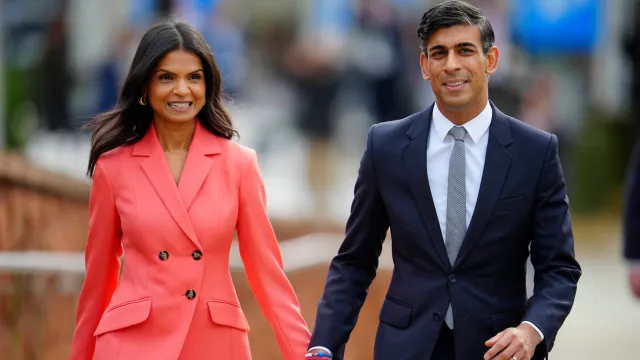
Public fascination with Akshata Murty extends beyond typical political spouse interest, landing instead at the intersection of wealth, tax policy, and perceived authenticity in governance. As the daughter of Infosys founder Narayana Murthy, her estimated wealth stake generates ongoing scrutiny that her husband’s political positioning has repeatedly struggled to defuse.
The narrative tension is structural: a former Chancellor who advocated fiscal restraint while his household held wealth managed through non-domiciled tax status creates perception problems no amount of policy correction fully resolves.
Wealth Disclosure Pressure And The Timing Of Public Correction
The controversy that threatened Sunak’s leadership ambitions centred on Murty’s non-dom status, which allowed her to avoid UK tax on foreign income despite residing in London. Technically legal, politically catastrophic—especially during a cost-of-living crisis where government messaging emphasized shared sacrifice.
Here’s what actually happened: reporting revealed the arrangement, public backlash accelerated, and Murty voluntarily changed her tax status while emphasizing that no rules had been broken.
The response strategy followed classic crisis management playbooks—acknowledge, explain, commit to change—but the timing lag meant the story had already solidified into shorthand for political elitism.
What I’ve learned is that tax arrangements are uniquely difficult to defend, regardless of legality. The complexity required to explain why something is permissible exceeds the attention span of most audiences, leaving only the impression of avoidance.
The Infosys Factor And Reputational Spillover Risk
Murty’s substantial shareholding in Infosys, valued at approximately £590 million, represents the bulk of the couple’s combined fortune. That stake creates ongoing disclosure requirements and potential conflict-of-interest scenarios whenever government policy intersects with technology sector interests.
Additional complications emerged around shareholding declarations in Koru Kids, a childcare venture, where inadvertent disclosure failures required retrospective correction and eventual charitable donation of the shares.
From a practical standpoint, these aren’t unusual wealth management challenges for high-net-worth individuals. They become political liabilities when the wealth scale collides with policy advocacy around taxation and public spending.
The reality is that voters apply different standards to political families than to private citizens, and the threshold for perceived impropriety drops dramatically when economic hardship is widespread.
Strategic Visibility And The Limits Of Humanization Efforts
Murty’s public appearances have increased strategically, including an unexpected introduction of her husband at the Conservative Party conference where she delivered personal remarks positioning him as her “best friend”.
The intent is transparent: soften perceptions, demonstrate partnership, create relatability through selective personal disclosure. The execution risks reinforcing the very distance it aims to close.
When someone worth hundreds of millions discusses household chores in magazine interviews, the framing itself becomes the story. The gap between the conversation’s mundane subject and the participants’ extraordinary circumstances creates cognitive dissonance that media coverage amplifies rather than resolves.
Look, the bottom line is that authenticity can’t be performed at this wealth level without triggering scepticism. The more deliberate the humanization effort appears, the more it confirms the initial perception problem.
Policy Intersection Risk And The Conflict-Of-Interest Shadow
Sunak’s time as Chancellor and Prime Minister required constant navigation of potential conflicts between government decisions and family financial interests. While formal processes exist to manage these situations, political opponents and media scrutiny apply a more stringent standard than legal compliance.
The downsizing of Catamaran Ventures UK, Murty’s venture capital fund, followed concerns about whether portfolio companies might benefit from policy decisions her husband influenced.
These preemptive moves demonstrate awareness of reputational risk, but they also validate the concern—if the arrangement was genuinely unproblematic, why change it?
What the data tells us is that perception management in politics operates on guilt-until-proven-innocent logic when money is involved. The burden of demonstrating propriety never ends, and each disclosure satisfies scrutiny only temporarily.
Narrative Persistence And The Challenge Of Moving Forward
Even after tax status changes and shareholding corrections, the Sunak-Murty wealth narrative persists as political shorthand. Opposition messaging returns to it reflexively, and media framing consistently positions their fortune as context for policy critique.
The challenge isn’t factual accuracy—the numbers are public and documented—it’s that wealth at this scale functions as disqualifying evidence for certain types of political argument.
When you’ve never worried about heating bills, advocating against universal energy subsidies reads differently, regardless of policy merits. When your household wealth exceeds the GDP of small nations, cost-of-living empathy campaigns face inherent credibility barriers.
I’ve seen this dynamic across multiple political contexts, and here’s what actually works: acknowledgment of privilege paired with policy that demonstrably benefits those without it. What doesn’t work is pretending the wealth gap doesn’t affect how messages land, or that personal anecdotes can bridge structural perception differences.

Previous Article
Keir Starmer wife Accident newsNext Article
Andy Murray wife Split news